Professional Work


Table of Contents
Hi, I am Gurjot. For the past decade, I have worked with social sector teams in India to find, make sense of, and use data to inform real decisions. I am less interested in data as an abstract object and more interested in what it does (or fails to do) once it enters reports, dashboards, meetings, and policy notes.
My work sits at the intersection of policy, data, and education, and is shaped by hands-on experience working within real institutional constraints. My work has been trusted by a range of international organisations, government departments, and institutions in India.
Get in touch
I am happy to explore a potential collaboration, share opinions on specific problems, or just have a casual chat!
Email me at contact [at] thatgurjot.com or drop a message on LinkedIn.
How we can collaborate
I am comfortable working independently, or as part of a larger consortium or research team.
Engagements can take different forms depending on your needs.
| Type of Engagement | Relevant Past Work |
|---|---|
| Short-term analytical or reporting assignments | UNESCO MGIEP |
| Ongoing advisory or consulting arrangements | UNICEF and World Bank |
| Workshops, training programmes, online courses | UNICEF |
| Collaborative research and writing partnerships | Breakthrough and Ashoka University |
| Data discovery, collection, and management | CPR and SFC |
| Co-creating reports, toolkits, and interactive materials | Mozilla Foundation and AI |
Long-term Engagement for Evaluation, Implementation and Monitoring
At the World Bank
Assignment Duration: July 2023 – to date
I work with education team at World Bank’s India office on a range of analytical and advisory engagements focused on education financing and programme design in India.
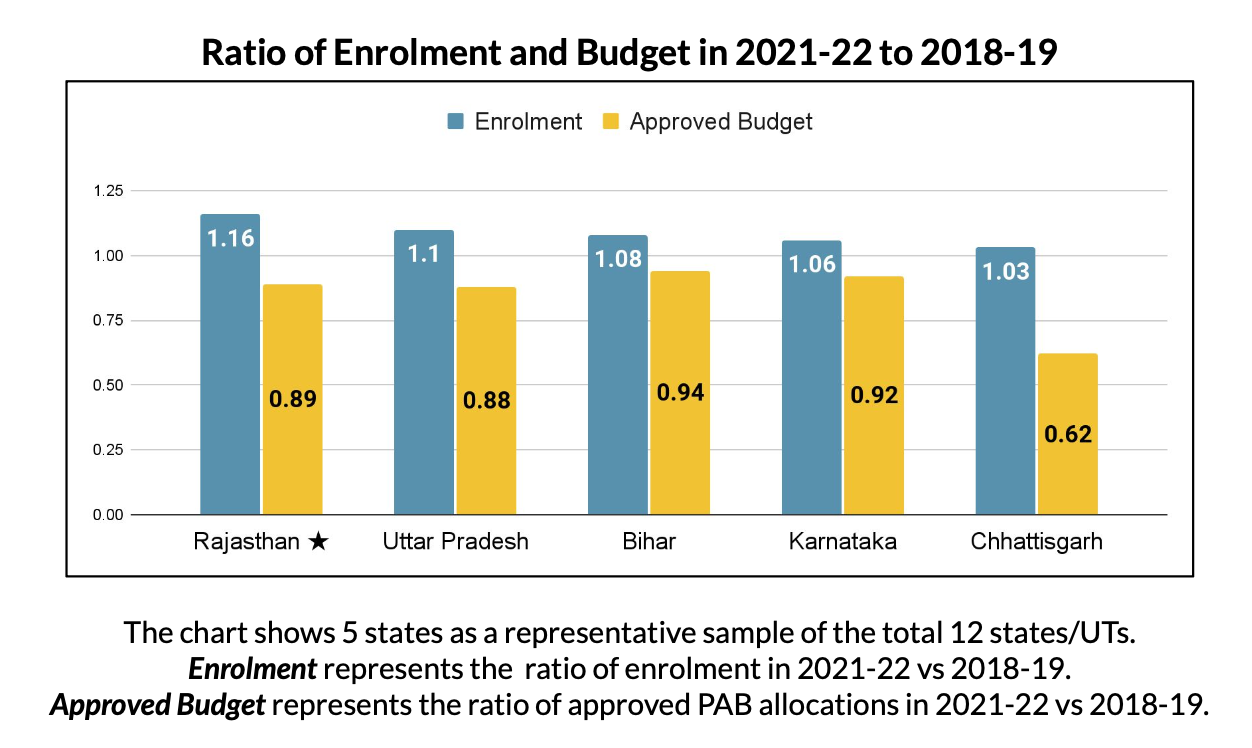
This included supporting the Ministry of Education, Government of India, through a public finance analysis of Samagra Shiksha, India’s flagship school education scheme. Using time-series data on budget demands and approvals, I examined how allocations translated into real spending over time, where purchasing power had eroded, and how per-student expenditure varied across states and levels of schooling. The analysis helped surface equity and efficiency concerns in fund distribution and informed discussions on the design of the scheme’s next iteration. Read the report’s findings here.
I also supported the development of an upcoming externally aided programme in Assam aimed at improving foundational learning outcomes and strengthening school-to-work transitions for adolescents. This work combined field visits, literature review, data analysis, and stakeholder consultations to identify gaps in quality, access, and infrastructure, and to support alignment with SDG 4.1 targets. As part of this engagement, I worked closely with the Government of Assam to analyse the existing school network alongside demographic trends, contributing to a school upgradation strategy grounded in projected demand and on-ground realities.
In parallel, I worked with the Lead Education Specialist for India on examining enrolment trends and fund utilisation at Industrial Training Institutes (ITIs) across multiple fiscal years. The analysis focused on unit economics and expenditure patterns, highlighting high per-seat costs, declining enrolments, and structural inefficiencies that raised questions about the long-term sustainability and effectiveness of vocational education financing.
At UNICEF
Assignment Duration: June 2021 – to date
During my work with UNICEF in West Bengal, I focused on strengthening how data, monitoring systems, and evidence were used within the state education system – not as parallel analytical exercises, but as inputs into everyday planning, review, and decision-making.
Strengthening Monitoring and Data Systems
I led efforts to improve results-based monitoring by working with government functionaries to design and operationalise education MIS reporting systems. This involved translating large administrative datasets into curated, decision-relevant views for use at state, district, and sub-district levels, and establishing shared protocols for data management, validation, and reporting. The emphasis throughout was on consistency, interpretability, and timeliness rather than producing exhaustive dashboards.
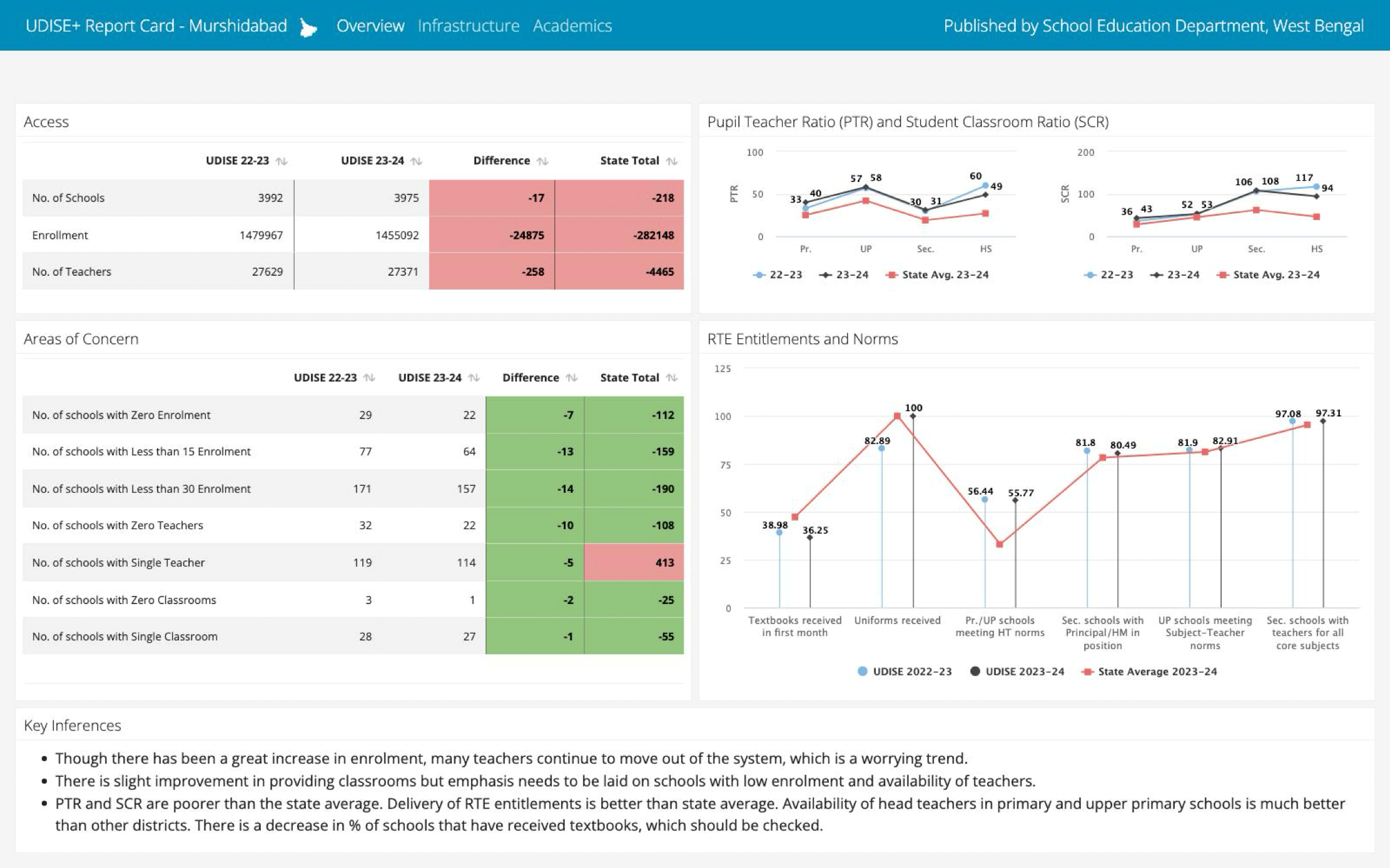
As a result, the state education department adopted standardised reporting formats and routines that were used for regular programme reviews, district performance discussions, and internal planning. These systems supported the production of district report cards and state-level briefs that were routinely shared with senior officials, reducing ad-hoc data requests and improving alignment between administrative data and planning processes.
Building Capacity for Evidence Use
A significant part of the work involved identifying gaps in how data was being used in practice and designing capacity-building programmes to address them. I developed and delivered hybrid training programmes for education functionaries that focused on practical skills – basic data management, interpreting indicators, and using evidence for planning and course correction, tailored to different administrative levels and roles.
These programmes reached hundreds of district and sub-district officials and were embedded within ongoing government and UNICEF training efforts. Participants were supported to apply these skills to live datasets, contributing to more informed annual planning exercises, improved monitoring of programme implementation, and greater confidence in engaging with data during review meetings.
Research, Evaluation, and Analytical Support
I oversaw multiple research and evaluation studies, both conducted internally and through external agencies. This included end-to-end guidance on research design, data collection, analysis, and reporting, with a consistent focus on ensuring that findings were methodologically sound and directly usable for programme refinement and policy dialogue.
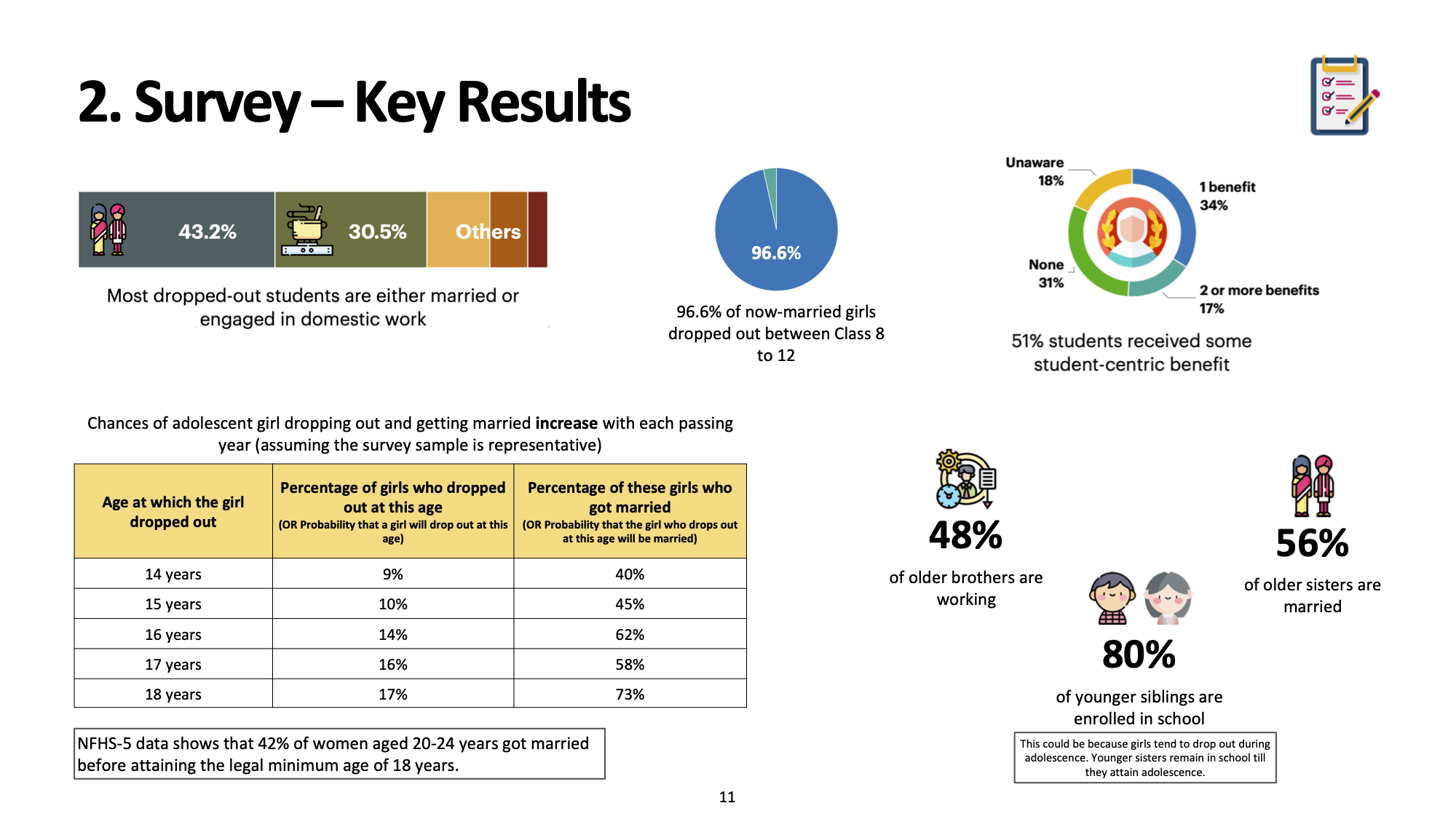
The studies covered issues such as secondary school dropout patterns and region-specific education challenges, and their findings were synthesised into policy briefs and presentations for government counterparts. These outputs were used to inform targeted interventions, prioritisation of geographies, and adjustments to ongoing programmes, rather than remaining as standalone research products.
Policy and Planning Support
Alongside analytical work, I supported the state in evidence-based planning processes, including differential planning exercises for specific regions and inputs into annual workplans and budgets under Samagra Shiksha. I was part of the core team involved in drafting West Bengal’s first State Education Policy, which required synthesising research, monitoring insights, and stakeholder inputs into clear, actionable policy recommendations for senior decision-makers.
This work involved presenting analytical findings and draft recommendations to senior officials, including departmental leadership, and iterating based on policy priorities and implementation realities. The process helped bridge the gap between evidence and policy articulation, ensuring that data and analysis informed both short-term planning decisions and longer-term strategic directions for the state education system.
Programme Evaluation and Research
Cost-Effectiveness Evaluation of Education Projects (2024-25) - Study for UNESCO MGIEP
Project Duration: November 2024 to July 2025
I led a cost-effectiveness evaluation of UNESCO MGIEP’s education programmes, focusing on how financial inputs translated into short- and longer-term outcomes across five projects implemented in South Africa, Cameroon, Uganda, Sri Lanka, and Bhutan.
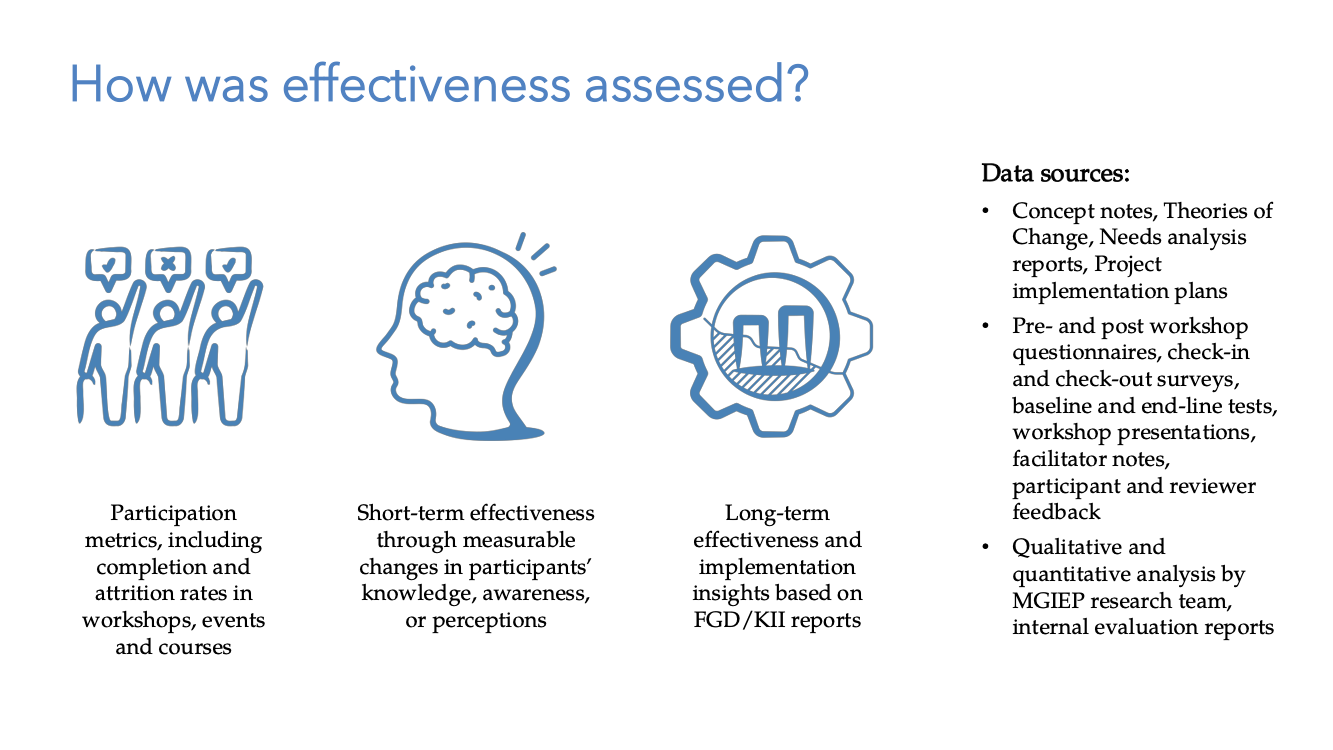
The work combined programme costing with outcome evidence from MGIEP’s internal evaluations to understand not just whether the initiatives worked, but how efficiently they did so in very different contexts.
Rather than treating the findings as definitive judgements, the analysis was framed to surface the key drivers of cost-effectiveness, clarify trade-offs, and support practical decision-making about future scale, design, and implementation, while recognising the strengths of the work already in place.
Examining Social Norms and Youth Perceptions Underpinning Support Systems for Violence against Women and Girls (2021) - Study for Breakthrough Trust
Project Duration: March to June 2021
I worked on a multi-state study examining the social norms and youth perceptions that shape support systems for violence against women and girls in India.
I led the quantitative analysis and supported the research design and report writing, working closely with the team to translate survey data into findings that could be used for advocacy rather than just description.
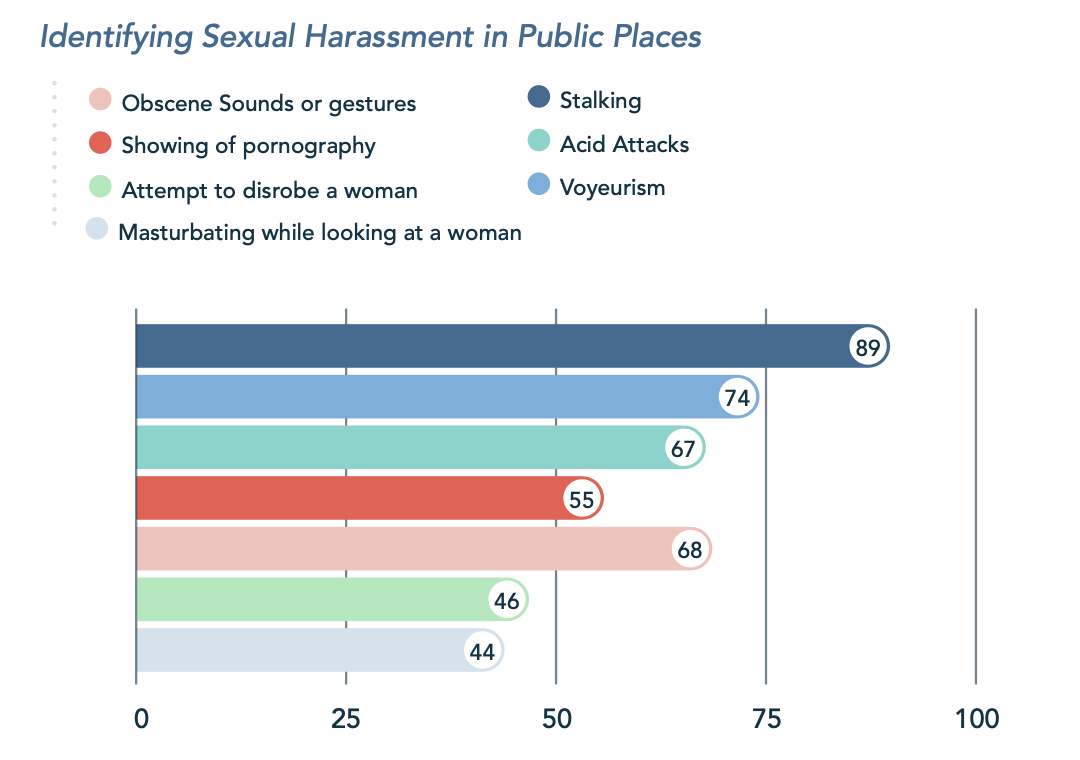
The study brought together perspectives from young people and service providers across five states, with a focus on identifying where formal systems fall short and how deeply embedded norms influence access to support. Much of the analytical work involved balancing statistical patterns with the limits of what the data could reasonably claim, and framing results in a way that could inform coordinated action by women’s rights organisations at the South Asia level.
Status of Foundational Learning in India (2019) - Study for Central Square Foundation
Project Duration: May to December 2019
I worked as part of a cross-sectoral team on a national study examining the status of foundational learning programmes in India. The work combined document review, budget analysis, and interviews with government functionaries and practitioners across six states, with the aim of grounding policy recommendations in how programmes were actually planned and implemented.
I contributed to the mixed-methods analysis and co-authored both the programme report and the policy brief, focusing on translating diverse state experiences into a set of phased, actionable policy asks. The findings from this study informed subsequent organisational and government discussions on foundational learning in the lead-up to and after the National Education Policy 2020.
Capacity Building: Workshops and Digital Courses
Basics of Data Management — Government of West Bengal (School Education Department)
I developed a training framework for MIS and data management functionaries working within the School Education Department, Government of West Bengal, with a focus on building practical skills for handling large, imperfect government datasets.
The engagement included a four-part online training programme that culminated in a residential, hands-on workshop for MIS coordinators at the state and district levels.
Following this, I designed a five-module digital course covering core data management competencies required for working with education management information systems.
The course modules covered:
- Introduction to Excel
- Advanced Excel for analysis and cleaning
- Data visualisation principles and practice
- Using Google Forms for data collection
- Managing and validating data with Google Sheets
The course was hosted on UniLearn (UNICEF India’s learning platform) and was accessed by over 500 school- and block-level functionaries.
Strengthening Data Ecosystems in Indian Schools – Fellowship by USAID, Mozilla Foundation and Aapti Institute
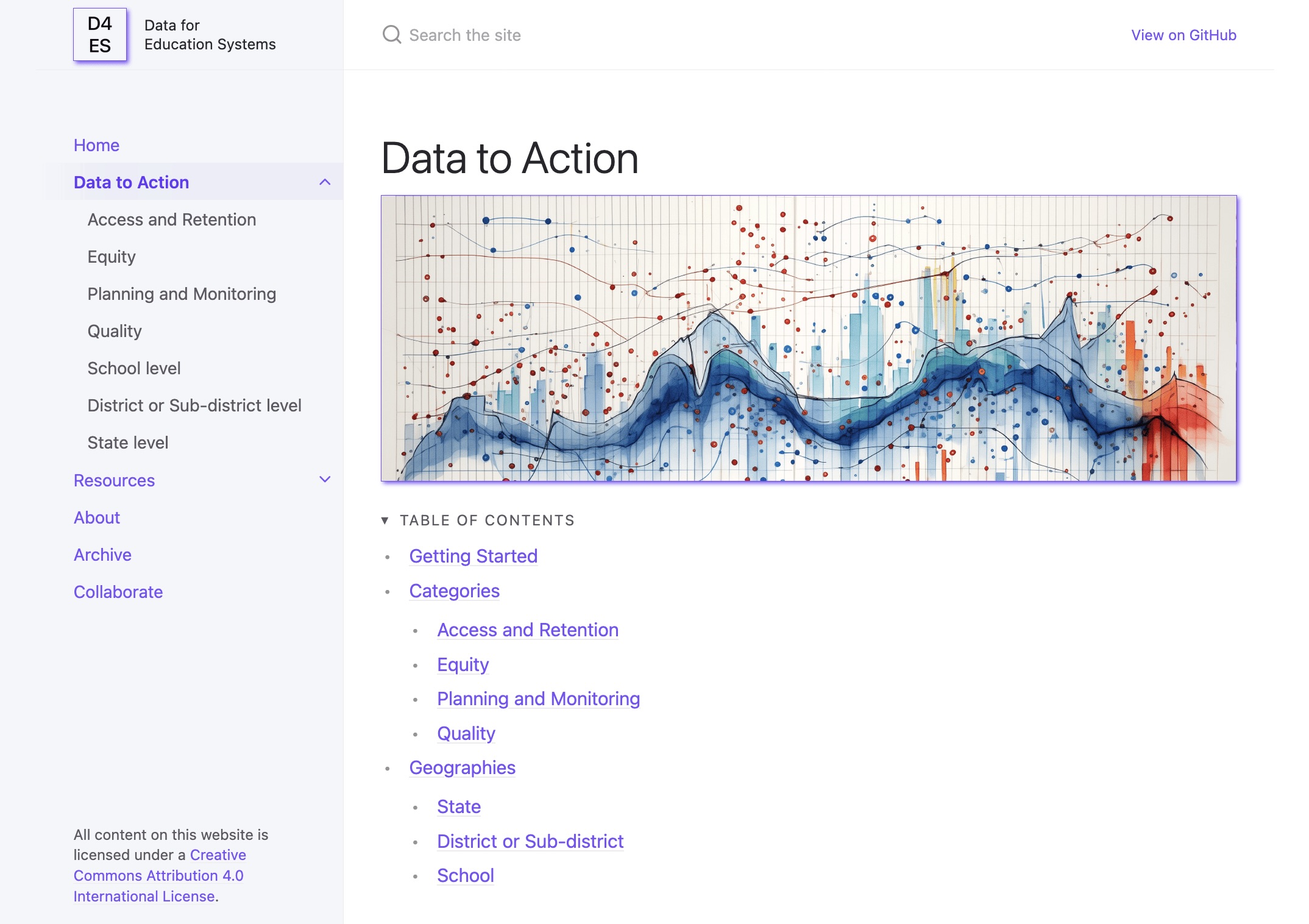
As part of a fellowship supported by USAID, the Mozilla Foundation, and the Aapti Institute, I led the development of Data for Education Systems, a public digital resource focused on improving how education data is designed, interpreted, and used in Indian school education systems. The work shifted attention from data collection and compliance toward data-to-action, providing practical guidance for government officials, policymakers, and researchers on using existing datasets to inform planning, monitoring, equity, and quality improvement within real institutional constraints.
Online Professional Development in Response to COVID-19 School Closures
During the COVID-19 pandemic, I worked on the design and delivery of large-scale online professional development programmes for teachers and education resource persons, aimed at addressing learning poverty and supporting instructional adaptation under severe constraints.
One such programme was conceptualised and implemented in Rajasthan in partnership with the Government of Rajasthan and UNICEF. The Online Teacher Professional Development (OTPD) course was among the first large-scale efforts of its kind, explicitly accounting for the psychological stress of the pandemic and the technological limitations faced by teachers. The course prioritised interaction and practical reflection over passive content consumption and was accessed by over 100,000 teachers through the UniLearn platform.
A similar online programme was subsequently developed for the 300-member State Resource Group of the Department of Basic Education, Government of Uttar Pradesh.
Across these engagements, I was responsible for designing and delivering the technical framework for the programmes, co-creating course content, analysing participant engagement data, providing client-side implementation support, and conducting live sessions with over 4,000 participants.
Other Capacity Building Engagements
- Conducted an in-house methods workshop at UNESCO MGIEP following the Cost-Effectiveness Evaluation of Education Projects, focusing on how similar evaluations could be undertaken internally and the practical constraints imposed by real-world data availability.
- Supported the storyboarding, content visualisation, and learning management system setup for a digital course on gender sensitisation for forest officials in India, funded by USAID.
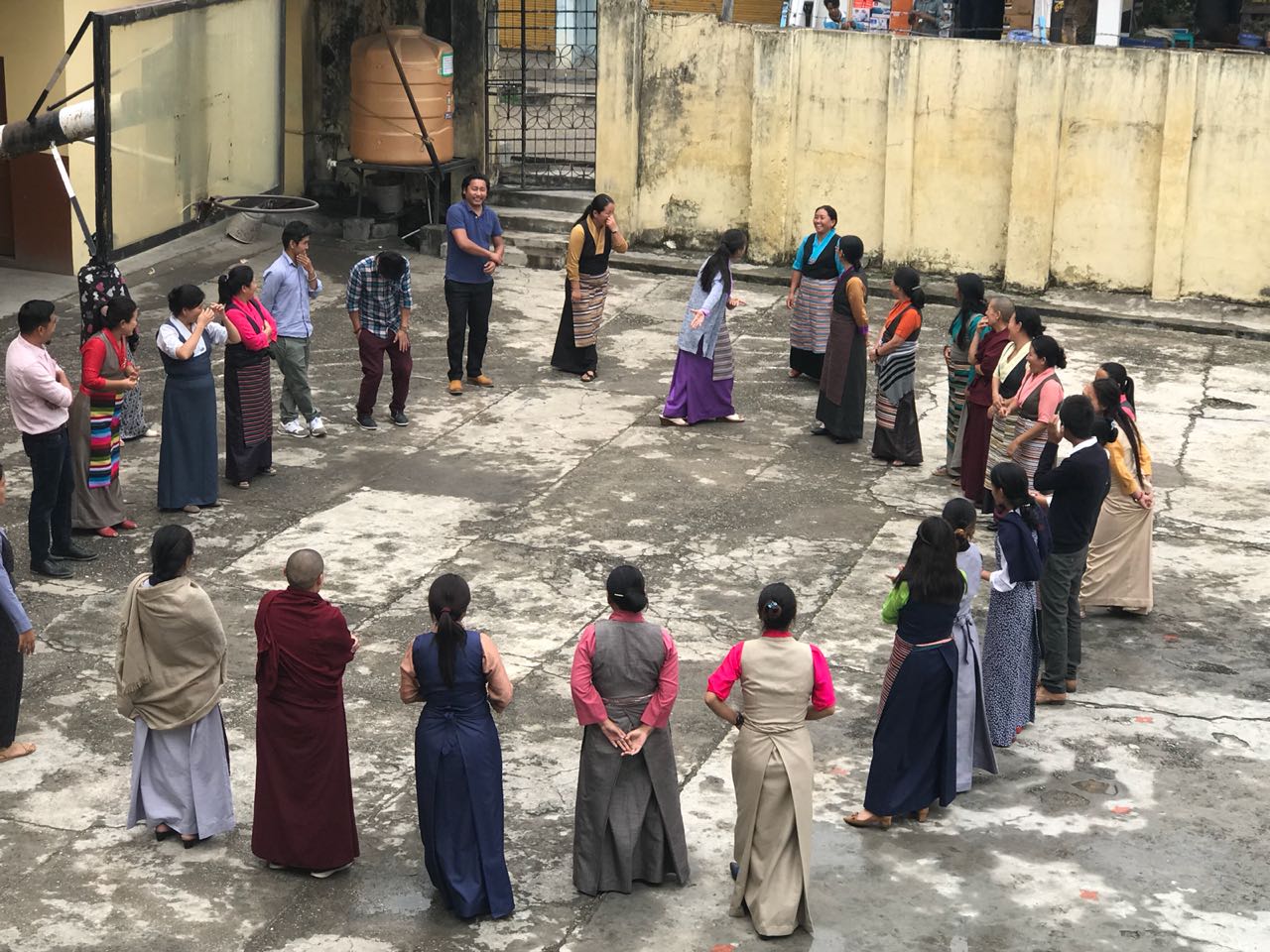
- Designed and delivered a workshop on evidence-informed policymaking for researchers and functionaries from the Tribal Development Department, Government of West Bengal, covering what constitutes evidence, how to analyse and present data, and how data can support policy implementation.
- Facilitated over 30 capacity-building workshops for students, teachers, and supervisors in the education sector, spanning topics from early language development to data-assisted field processes.
Data Infrastructure and Editorial Work
Alongside my core work in education, policy, and data use, I have contributed to a range of data infrastructure and editorial projects that sit slightly outside my main thematic focus but draw on the same underlying skills: working with messy information, improving structure and clarity, and making complex material usable for others.
Data Discovery, Collection, and Management
I have supported research teams by designing and executing data discovery and collection processes where relevant information was not readily available in clean or documented formats. This included scraping and consolidating air quality data from CPCB servers and mortality data from municipal corporation websites to support longitudinal analysis for the Sustainable Futures Collective, which later fed into peer-reviewed research outputs in The Lancet.
Similarly, I supported the team at the Accountability Initiative at Centre for Policy Research by extracting, cleaning, and documenting beneficiary, operational, and financial data from government portals and reports. This work enabled cross-state and over-time analysis of major government-sponsored schemes and reduced the overhead for researchers to focus on interpretation rather than data assembly.
Editorial and Content Development Support
I have also provided editorial and structural inputs to research communication and learning materials, particularly where content needed to balance technical accuracy with accessibility. For Breakthrough Trust, I supported the editing and development of assessment frameworks, workbooks, and toolkits on themes such as digital safety, positive masculinity, and parenting, produced as part of a UNICEF-supported programme. The focus here was on ensuring consistency of language, clarity of concepts, and coherence across multiple products so they could be used together as part of a broader learning journey.
In a similar capacity, I provided content structure and editorial support for the Toolkit on Gender and Sexuality developed by the Centre for Studies in Gender and Sexuality at Ashoka University. The work involved refining the framing, flow, and tone of the toolkit to ensure it functioned as an accessible starting point for readers, while being explicit about its scope, limitations, and intent. The emphasis throughout was on demystifying terminology, supporting inclusive language, and clearly signalling what the document could—and could not—do for its intended audience.
EdTech and Software
I have also worked on small, product-oriented projects that sit at the intersection of education, software, and information access—often driven by specific frustrations encountered in my own work.
I developed Buzee, an open-source, cross-platform full-text search application, to solve a simple but persistent problem: finding the right document at the right moment across large, unstructured folders. The project gained wider attention after the idea and approach were discussed on the front page of Hacker News.
I also founded Chachi, an EdTech startup launched during the first COVID-19 school lockdown. Chachi was an activity generator designed to prompt reflection, conversation, and skill-building through well-designed questions. The product was used by over 12,000 users across India before being wound down, providing first-hand experience with product design, iteration, and failure in early-stage EdTech.
In addition, I led the content creation process for a flashcard-based learning app in an early-stage startup, working closely with the product and engineering teams to translate learning goals into structured, usable digital content.
If you like what I do, get in touch!